
The Gower PeninsulaA Guide to the Gower Coast & Interior
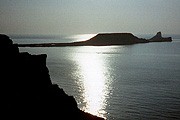
For those who enjoy city life, Swansea is a good base from which to visit Gower, with plenty of accomodation available. Check out the Tourist Information Centre near the main bus station. Mumbles, at the southwestern end of Swansea, is a bustling holiday location in the summer with many hotels, restaurants and pubs. For those who wish to avoid the city, there are plenty of caravan and camp sites situated all over Gower, so there's no problem finding accomodation in the area. GeologyMost of Gower is formed of limestone, which is responsible for the cliffs, islands and caves. Many of the bays have been formed where softer millstone grit has eroded away. Most of Gower is approximately 200ft high and is actually a wave cut platform. Above this rise a few isolated hills, monadnocks, composed of tougher old red sandstone. These Gower rocks actually forms the south-western edge of a roughly circular area of sedimentary rocks, the northern edge of which forms the Brecon Beacons. The same rocks can be seen there, but in quite a different configuration. In ancient times the sea level was much lower and what is now the Bristol Channel was once a huge low-lying plain. |
|
|
|
|
|
|
|
|
 Subscribe in a reader Subscribe in a reader |
||||
© Paul Saunders 1999-2010. All Rights Reserved.
|
||||
 Digg
Digg Delicious
 Reddit
 Stumbleupon
 Facebook